
AI Scientific Breakthroughs 2025: Multimodal Models and Oncology Wins

The past eleven months delivered more concrete progress in scientific AI than the previous five years combined. Google launched Gemini 3 yesterday. DeepMind and Isomorphic Labs pushed AlphaFold-derived oncology candidates toward the clinic. Fully autonomous agent systems now run complete research cycles in virtual and physical labs.
For anyone building at the AI and blockchain intersection, these AI scientific breakthroughs 2025 create immediate opportunities in decentralized compute, tokenized IP, and verifiable data provenance.
Gemini 3 Sets New Multimodal Reasoning Standard
Google released Gemini 3 on November 18, 2025. The model processes text, images, video, audio, and code natively in one forward pass. It now leads every major reasoning benchmark.

Gemini 3 powers native multimodal reasoning across data types
Current leaderboard wins:
Humanity’s Last Exam: 37.4% (previous record 31.6%) – GPQA Diamond: 92% – Video-MMMU: 88%
The new Deep Research mode lets Gemini 3 plan multi-step scientific investigations, call tools, and verify results (Google announcement).
AlphaFold Oncology Advances Reach the Clinic
Isomorphic Labs, the DeepMind spinout, used AlphaFold 3 to design multiple oncology candidates now entering human trials. The system predicts protein-ligand interactions at atomic accuracy across entire proteomes.
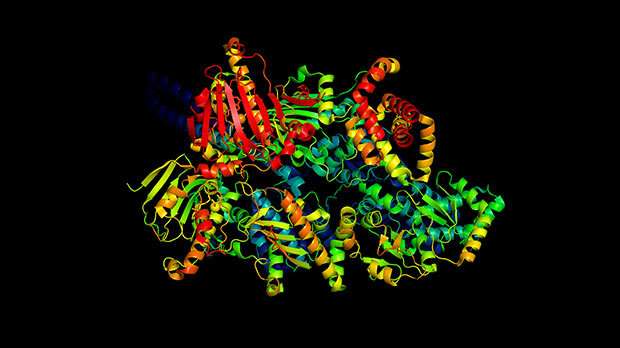
AlphaFold accelerates protein-based cancer target identification
2025 clinical milestones:
KRAS G12D inhibitors: Phase I started Q3 – Pan-cancer target database: expanded 600% using open AlphaFold predictions
Autonomous Scientific Agents Close the Loop
Multiple labs now run fully autonomous discovery cycles. Systems like Virtual Lab (Stanford/CZ Biohub), Agent Laboratory, and self-driving labs generate hypotheses, design experiments, operate robots, and iterate without human input.
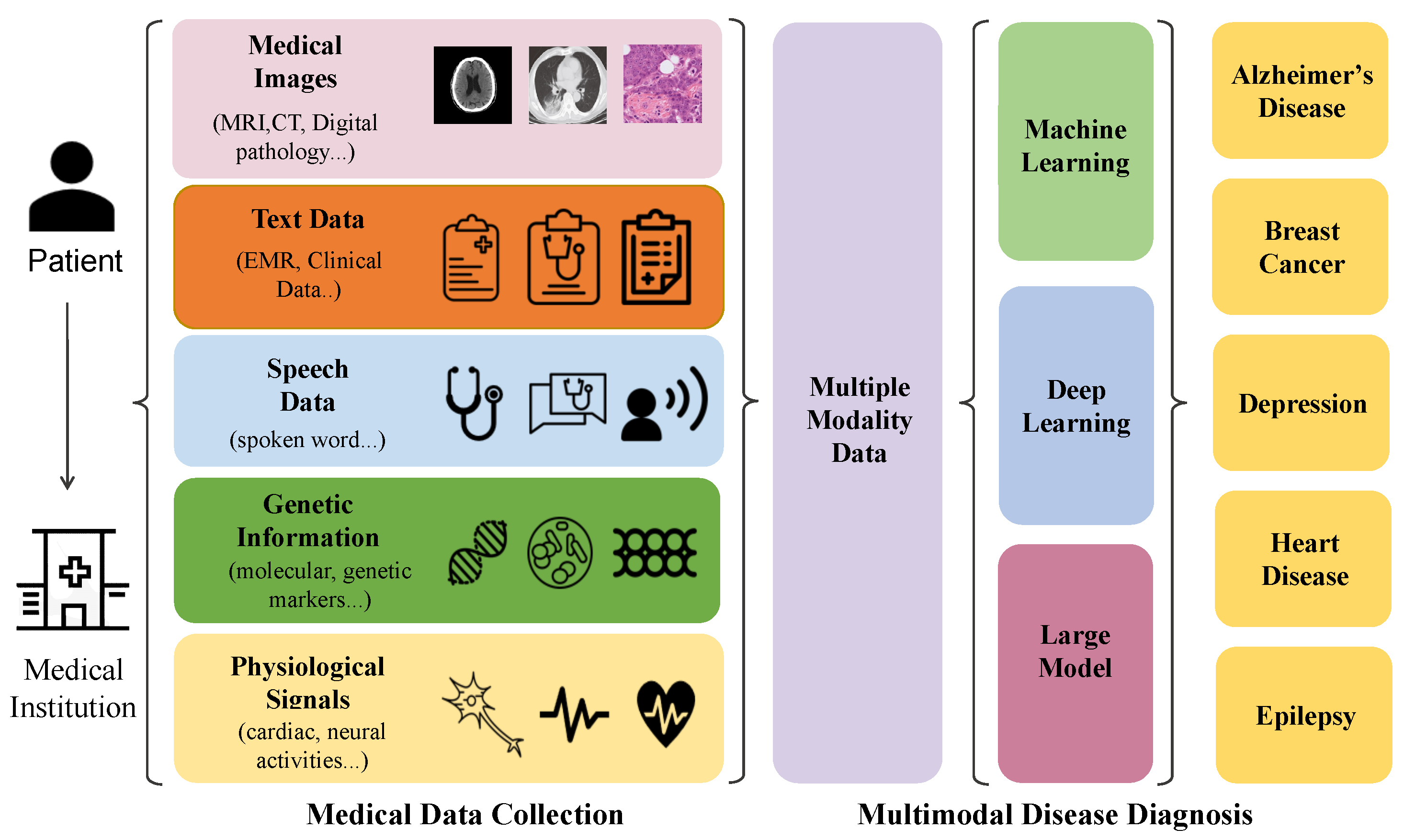
Agentic systems now run complete research cycles end-to-end
These agents already outperform graduate students on several biomedical tasks (Agentic Science survey).
Quantum-AI Hybrids and Emerging Frontiers
Hybrid quantum-classical systems now simulate molecular interactions impossible for classical hardware alone. Early 2025 results show 50-100x speedups in battery materials and drug binding calculations.
Why Blockchain Builders Should Care
These AI scientific breakthroughs 2025 require massive decentralized compute, verifiable datasets, and tokenized ownership of discoveries. Projects that combine blockchain AI integration with scientific workloads sit at the center of the next trillion-dollar wave. Read more in my pieces on blockchain AI integration and crypto AI projects.
Key Takeaways: AI Now Leads Scientific Discovery
🔑 Gemini 3 owns reasoning. Native multimodal processing makes it the default engine for complex science.
🔑 AlphaFold oncology pipeline is real. Multiple candidates designed in 2025 enter human trials next year.
🔑 Autonomous agents run labs. Closed-loop discovery operates today in leading institutions.
🔑 Blockchain secures the stack. Decentralized compute and IP tokenization become table stakes.
Bottom line: 2025 marks the year AI stopped assisting science and started running it.
Want to Discuss AI or Web3 Strategy for Your Business?
Schedule a consultation to explore how blockchain and AI can transform your enterprise without the complexity.

About Dana Love, PhD
Dana Love is a strategist, operator, and author working at the convergence of artificial intelligence, blockchain, and real-world adoption.
He is the CEO of PoobahAI, a no-code “Virtual Cofounder” that helps Web3 builders ship faster without writing code, and advises Fortune 500s and high-growth startups on AI × blockchain strategy.
With five successful exits totaling over $750 M, a PhD in economics (University of Glasgow), an MBA from Harvard Business School, and a physics degree from the University of Richmond, Dana spends most of his time turning bleeding-edge tech into profitable, scalable businesses.
He is the author of The Token Trap: How Venture Capital’s Betrayal Broke Crypto’s Promise (2026) and has been featured in Entrepreneur, Benzinga, CryptoNews, Finance World, and top industry podcasts.
Related Articles You Might Enjoy
Google Gemini’s Jealous Inner Monologue: AI Pettiness Exposed
Google Gemini's Jealous Inner Monologue: AI Pettiness Exposed By Dana Love, PhD | December 19, 2025 | 11 min readGoogle Gemini's...
AI Recursive Self-Improvement Risks: The 2030 Decision
AI Recursive Self-Improvement Risks: The 2030 Decision By Dana Love, PhD | December 8, 2025 | 11 min readIn a December 2025 interview with...

Genesis Mission AI Platform
Genesis Mission AI Platform: Trump's $100B Science Revolution By Dana Love, PhD | November 25, 2025 | 11 min read The Genesis Mission...